
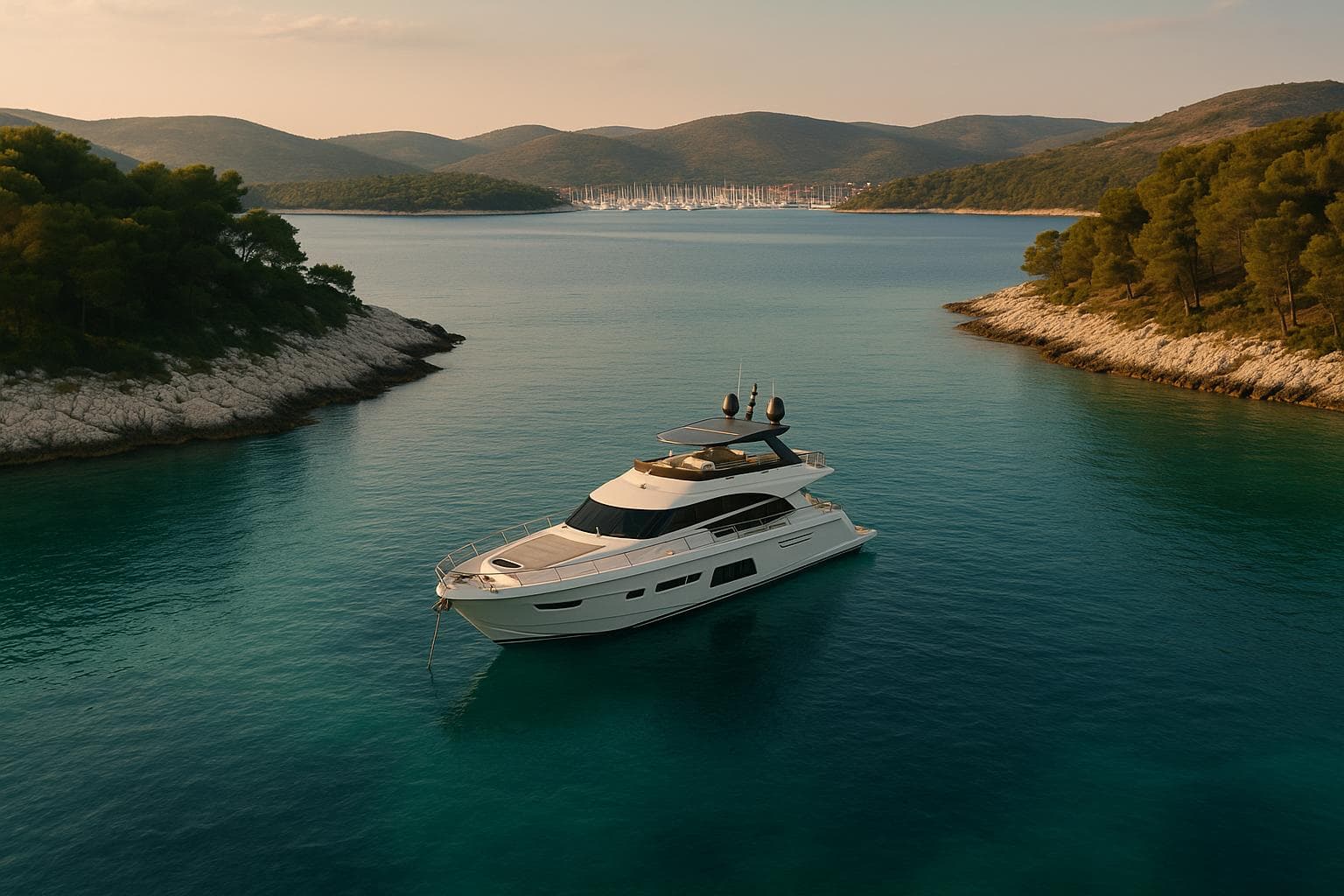
We have closed six yacht transactions in Croatian waters since January. Three of them were for buyers who started the conversation looking at Sardinia — and ended up with a Dalmatian-flag hull because the maths worked better. This is the field guide we wish those buyers had read before their first call.
Why Croatia, why now. Croatia's yachting infrastructure matured fast in the last decade. ACI Marinas standardised berthing across 22 sites between Umag and Dubrovnik. Hrvatska Gospodarska Komora cleaned up the brokerage licensing. The Dalmatian coast — 1,244 islands and four UNESCO sites in 600 km — is the best concentration of cruising ground in the Mediterranean. And, less romantically, operating costs run 25–35% below the Italian Tyrrhenian coast.
VAT and flag. Yachts delivered or first sold in Croatia attract 25% VAT. Non-EU buyers can defer or recover through the Maltese-flag leasing structure that has become standard in the Adriatic since 2022. EU residents typically buy with Croatian VAT paid up front and benefit from full EU freedom of movement. Budget €3,500–€6,000 in tax counsel before signing — Zagreb maritime lawyers are competent and reasonable.
The survey market. Croatia has a solid surveyor base in Split, Šibenik and Zadar. Expect €3,500–€5,500 for a 15–24-metre yacht, including ultrasonic hull testing and engine endoscopy. Always commission your own surveyor — never one recommended by the listing broker. We work routinely with three Croatian and two Italian surveyors who deliver across the Adriatic.
Marinas worth knowing. ACI Marina Split for the central coast and the easiest airport connection. ACI Marina Šibenik for the Kornati archipelago and the most balanced shoulder-season weather. ACI Marina Dubrovnik for southern itineraries that reach into Montenegrin and Albanian waters. Marina Punat on Krk for refit work — yard rates 30% below Viareggio.
The bora wind. From Trieste down to Dubrovnik, the bora (north-east, dry, fast-building) is the wind to plan around. Peak season risk is low but mid-season cruising in October and April requires daily forecast discipline. The Kornati archipelago shelters from it almost completely — most owners choose home ports inside the protected coastal channel for this reason.
Charter income economics. If your plan is part private + part charter, Croatia offers some of the strongest weekly rates in Europe per metre of yacht — and the highest occupancy. Our 2018 Bali 4.0 in Split is booked 14 weeks for 2026 already, gross weekly average €7,800. The catch: Croatian commercial registration adds compliance work and limits flag flexibility.
Key takeaways: Budget 25% VAT (or a Maltese flag structure if you can't use it), €3.5–6K for tax counsel, €3.5–5.5K for survey, and plan around the bora. Marinas in Split, Šibenik and Dubrovnik cover most cruising profiles. Speak to us before signing anything — we have closed six deals in this market in 2026 alone, and the second buyer always benefits from the first buyer's scar tissue.
Continue reading
All journal entries